

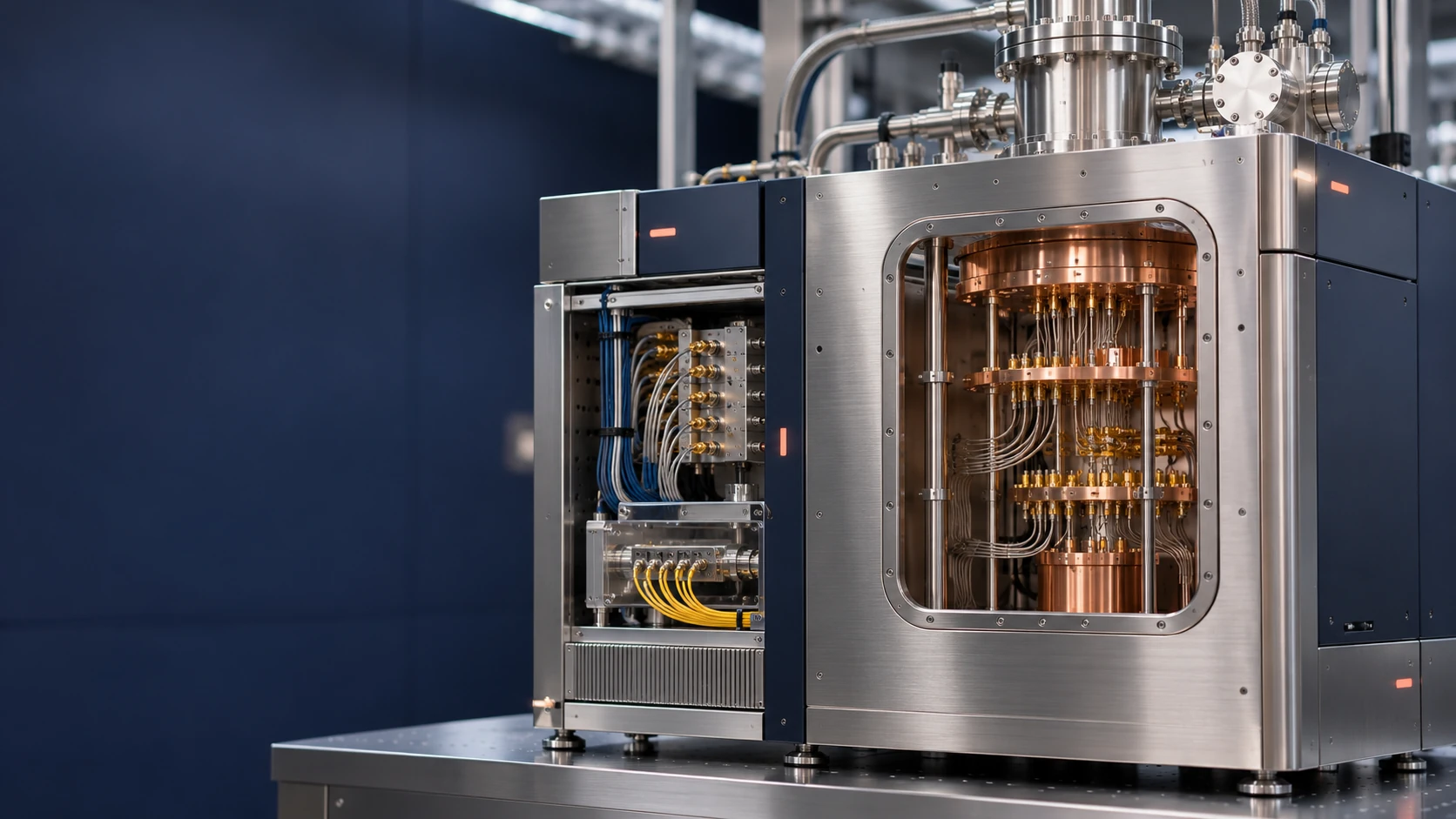
Modular Quantum Computing
QONTOS
A modular quantum architecture connecting superconducting processors through photonic links, designed to coordinate computation across multiple cryogenic modules.
The Customer Case
The Opportunity
The first commercial question is the workload. A larger architecture matters only if it can support useful computation at a practical cost to integrate and operate.
Bring a Customer PerspectiveWhat We Are Building
The Product
QONTOS studies connected superconducting quantum modules rather than a single monolithic machine. Device behaviour, cryogenic integration, optical interconnection and classical timing are treated as coupled architectural requirements.
- Development Focus
- Modular Quantum Computing
How It Fits Together
The System
Separate cryogenic modules are intended to exchange entanglement through a heralded photonic link, coordinated by classical control and error-management systems.
Critical Dependencies
- Module and interconnect performance
- Control and error-management requirements
- Specialist fabrication and test infrastructure
System Architecture
How the proposed elements connect.
Cryogenic Modules
Separate superconducting modules provide the proposed computational building blocks.
Photonic Interconnect
A heralded optical link is intended to exchange entanglement between modules.
Coordinated Control
Classical control and error management must coordinate operations across the architecture.
Conceptual system view. The development questions below set out what needs to be established.
The Next Technical Decisions
Evaluation
Module, interconnect and control performance must be evaluated together. Useful computation depends on the behaviour of the connected system.
What quantum operations must the modules and photonic links support?
How do link losses, fidelity and connection rates affect system performance?
What evidence would establish an advantage over a comparable architecture without modular interconnection?
Questions & Answers
QONTOS
FAQs
Technical scope, development requirements and ways to contribute.
Ask About QONTOSWhat Is QONTOS Designed to Study?
QONTOS studies a modular superconducting quantum-computing architecture in which separate modules are connected by photonic links. The programme treats the computing devices, cryogenic integration, optical interconnection and coordinated classical control as parts of one system whose behaviour must be assessed together.
Why Study Separate Modules Rather than a Monolithic Machine?
The proposed architecture examines what connected quantum modules could support compared with a machine without modular interconnection. A useful assessment must establish whether the complete arrangement offers an advantage, including the demands of its links, control systems and operating infrastructure.
What Role Do the Photonic Links Play?
Separate cryogenic modules are intended to exchange entanglement through a heralded photonic link. The development question is which quantum operations those connections can support and whether the links perform well enough to contribute to useful behaviour across the complete architecture.
Why Are Cryogenic Integration and Optical Interconnection Considered Together?
QONTOS treats device behaviour, cryogenic integration and optical interconnection as coupled architectural requirements. Evaluation needs to examine their interactions with classical timing and coordinated control, establishing how the combined system behaves under the conditions relevant to the operations it is intended to support.
How Does Classical Control Fit the Architecture?
Coordinated real-time control and error-management systems are part of the proposed connection between quantum modules. Their requirements must be established alongside quantum operations and link behaviour, with the development plan showing how timing, control and connections would support operation across the complete architecture.
Which Link Properties Matter to System Performance?
Link loss, fidelity and connection rates are explicit evaluation questions for QONTOS. The work needs to establish how those properties affect the operations the architecture can support, with test conditions and system requirements clear enough to interpret their significance.
What Should Be Compared with a Non-Modular Alternative?
The comparison needs a defined workload and the quantum operations required to support it, with modular interconnection included in the system being assessed. Evidence should address the capability of the complete architecture and the practical cost of integrating and operating it against the chosen alternative.
Why Does the Commercial Assessment Begin with a Workload?
The workload defines what useful computation would mean for a prospective application and what the architecture would need to support. QONTOS’s commercial assessment connects that technical capability with integration and operating costs, so the work can examine usefulness and practical cost together.
What Specialist Infrastructure Does Development Depend On?
The development scope depends on specialist fabrication and test infrastructure, together with evidence about modules, interconnects and control requirements. A practical work plan identifies the facilities and capabilities needed, the questions they would investigate and the arrangements required to access them for that defined scope.
What Should a Technical or Capital Discussion Establish First?
Begin with the workload, the module and link requirements, and the evidence needed for the next architectural decision. A useful discussion can then connect the proposed work to specialist fabrication, testing, control requirements and integration costs, with resources considered against that specific scope.
Engagement
Work on QONTOS
Choose the route that fits your contribution. Your enquiry will carry this venture’s name into the conversation.
Enquire About QONTOSBuild the Company
Founders and venture leaders: bring the experience to own the business, product or a critical operating function.
The Founder PathwayExplore an EIR Assignment
Investigate a customer problem, product requirement or development decision. Propose a defined piece of work and a useful outcome.
Discuss an EIR AssignmentContribute a Capability
Research and industry partners: bring a test method, specialist facility, manufacturing process or real customer requirement.
Partnership PathwaysDiscuss Capital
Review the venture’s development plan, evidence, intellectual-property position and financing requirements.
Capital Partner Information