

Aircraft Systems
STRATOZ
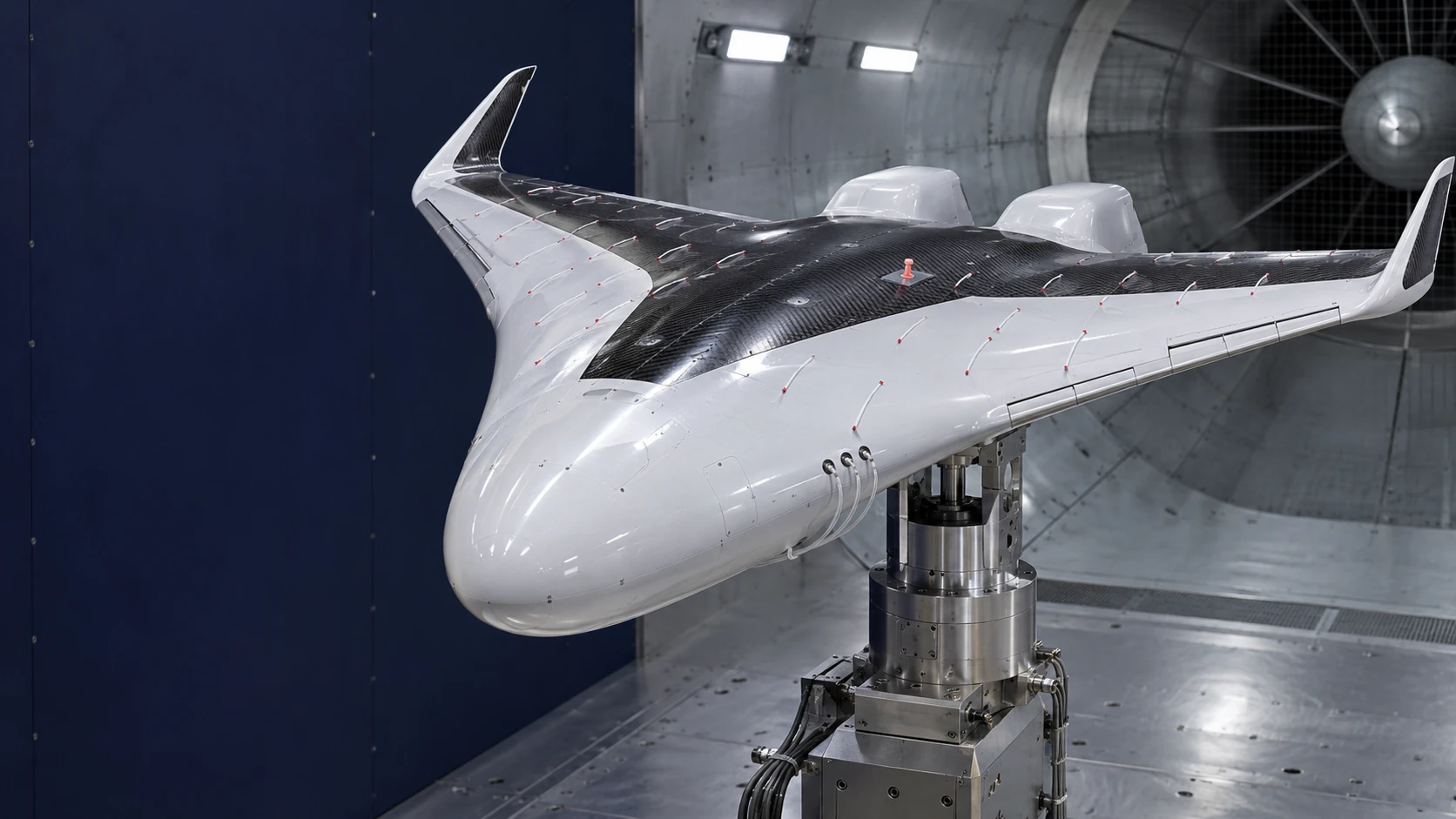
Researching blended-wing-body aircraft and low-boom high-speed transport, combining aerodynamics, structures and propulsion around demanding efficiency, speed and mission requirements.
The Customer Case
The Opportunity
Operators assess an aircraft through its mission and lifecycle costs. Manufacturing, certification and operating infrastructure determine whether a technical improvement can become a viable aircraft programme.
Bring a Customer PerspectiveWhat We Are Building
The Product
STRATOZ studies two aircraft families: efficient blended-wing-body platforms and low-boom high-speed transport. Aerodynamics, structures, propulsion, thermal control and mission requirements form a coupled development problem.
- Development Focus
- Aircraft Systems
How It Fits Together
The System
Mission models, correlated aerodynamic tests, representative structures and integrated ground systems are intended to establish the evidence required before aircraft-level performance claims.
Critical Dependencies
- Aerodynamic and propulsion-system integration
- Manufacturing, test and certification pathways
- Mission economics and operating infrastructure
System Architecture
How the proposed elements connect.
Mission & Models
Mission requirements and aerodynamic models define the intended aircraft operating envelope.
Representative Tests
Correlated aerodynamic tests and representative structures examine the design assumptions.
Integrated Ground Systems
Integrated ground testing builds the evidence needed before aircraft-level performance claims.
Conceptual system view. The development questions below set out what needs to be established.
The Next Technical Decisions
Evaluation
A credible aircraft case requires correlated models, representative tests and a certification pathway tied to a specific mission.
Which aircraft mission and operating conditions define the performance requirements?
How do aerodynamic and propulsion choices interact across the full operating envelope?
What simulation, test and certification evidence would be required to substantiate the proposed advantage?
Questions & Answers
STRATOZ
FAQs
Technical scope, development requirements and ways to contribute.
Ask About STRATOZWhat Aircraft Research Does STRATOZ Cover?
STRATOZ studies two civil-aircraft families: efficient blended-wing-body platforms and low-boom high-speed transport. The programme considers aerodynamics, structures, propulsion, thermal control and mission requirements as a coupled problem, so the public proposition concerns aircraft-system research rather than a single demonstrated aircraft or a claimed operating fleet.
Are the Blended-Wing-Body and High-Speed Studies One Aircraft?
The profile identifies two aircraft families, each with its own mission and operating conditions to define. Their shared systems perspective does not establish that the same configuration meets both sets of requirements; proposed advantages need to be assessed against the particular aircraft mission and evidence pathway.
Why Are Aerodynamics and Propulsion Assessed Together?
Aerodynamic and propulsion choices form an explicit integration question across the intended operating envelope. STRATOZ’s approach examines those interactions within the mission model, so a proposed change can be assessed in relation to the performance requirements and evidence needed for the complete aircraft system.
What Needs to Be Defined Before Comparing Aircraft Performance?
The aircraft mission and operating conditions need to establish the performance requirements before a proposed advantage can be assessed. A comparison must then connect those requirements with the full operating envelope and the simulation, test and certification evidence relevant to the aircraft concept being examined.
How Are Simulation and Physical Tests Connected in the Approach?
Mission models and correlated aerodynamic tests are intended to work alongside representative structures and integrated ground systems. The development task is to connect the proposed architecture with relevant physical evidence, creating a coherent basis for assessing aircraft-level claims within the defined mission and operating conditions.
Where Do Structures and Thermal Control Enter the Research?
Structures and thermal control are included in the coupled aircraft-development problem alongside aerodynamics, propulsion and mission requirements. Their role must be resolved within the proposed configuration and its operating conditions, with representative structural and integrated ground-system work contributing to the wider evidence needed for the programme.
Does This Profile Describe a Certified STRATOZ Aircraft?
The profile describes civil-aircraft research, intended evidence work and certification dependencies, rather than asserting that an aircraft is certified. Any aircraft-level performance or delivery proposition needs the relevant simulation, physical-test and certification evidence, assessed within a defined mission and a practical route to manufacture and operation.
How Do Manufacturing and Operating Infrastructure Affect Viability?
A technical improvement needs a viable route through manufacturing, certification and the infrastructure required to operate the aircraft. STRATOZ’s commercial assessment therefore connects the proposed architecture with mission economics and lifecycle costs, rather than treating an isolated efficiency improvement as sufficient grounds for a commercial aircraft programme.
How Would an Aircraft Operator Assess a STRATOZ Proposition?
An operator would assess the concept through its intended mission and lifecycle costs, including the conditions under which it could be manufactured, qualified and operated. The relevant discussion must connect any proposed technical advantage with operating requirements and a credible evidence pathway, rather than rely on an unspecified performance claim.
What Could an Aerospace or Research Partner Contribute?
Relevant contributions could address aerodynamic and propulsion integration, representative testing, manufacturing requirements or a defined mission-economics question. The proposed work should identify the aircraft family and operating conditions concerned, together with the particular evidence or capability it would add to the development and qualification pathway.
Engagement
Work on STRATOZ
Choose the route that fits your contribution. Your enquiry will carry this venture’s name into the conversation.
Enquire About STRATOZBuild the Company
Founders and venture leaders: bring the experience to own the business, product or a critical operating function.
The Founder PathwayExplore an EIR Assignment
Investigate a customer problem, product requirement or development decision. Propose a defined piece of work and a useful outcome.
Discuss an EIR AssignmentContribute a Capability
Research and industry partners: bring a test method, specialist facility, manufacturing process or real customer requirement.
Partnership PathwaysDiscuss Capital
Review the venture’s development plan, evidence, intellectual-property position and financing requirements.
Capital Partner Information