

Programmable 3D Weaving
SYNTROPY
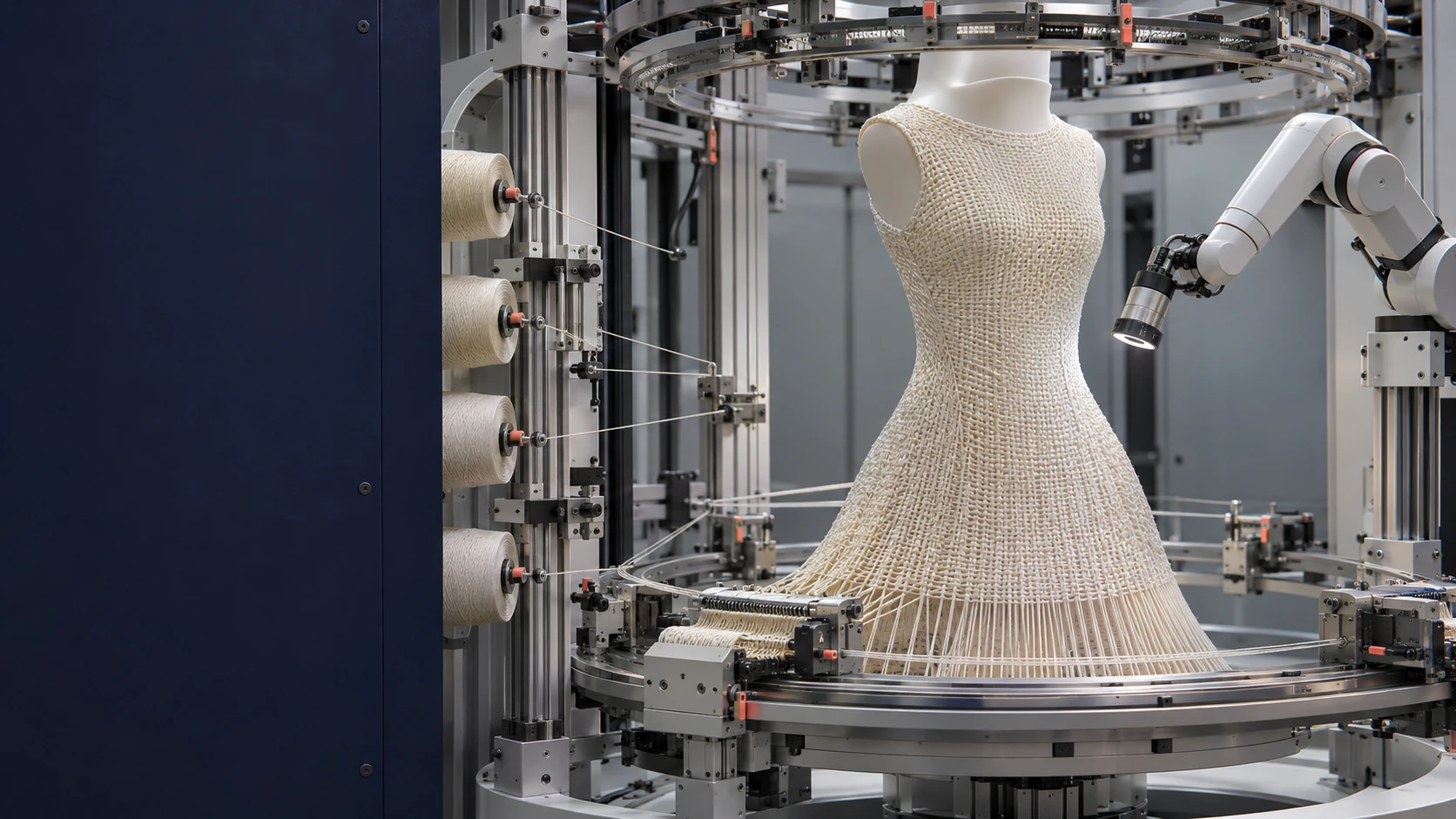
Programmable 3D-weaving systems intended to turn digital garment geometry into shaped textiles, connecting machine control, yarn behaviour and quality inspection.
The Customer Case
The Opportunity
Manufacturers need a product that justifies the process. Production quality, throughput, waste, labour requirements and unit economics must be compared with the relevant alternatives.
Bring a Customer PerspectiveWhat We Are Building
The Product
SYNTROPY explores translating a digital garment model into a shaped woven structure. Geometry, yarn behaviour, machine motion, handling and inspection are treated as one manufacturing system.
- Development Focus
- Programmable 3D Weaving
How It Fits Together
The System
A versioned digital model is intended to drive multi-axis weaving and robotic operations while measurement compares the physical structure with the intended geometry and records remaining work.
Critical Dependencies
- Material behaviour and process control
- Digital specification and manufacturing interoperability
- Production quality, throughput and unit economics
System Architecture
How the proposed elements connect.
Digital Geometry
A versioned digital model specifies the intended textile structure.
Weaving & Robotics
Multi-axis weaving and robotic operations are intended to turn the specification into a physical part.
Measurement & Feedback
Measurement compares the output with the intended geometry and records remaining work.
Conceptual system view. The development questions below set out what needs to be established.
The Next Technical Decisions
Evaluation
The central test is repeatable physical output: geometry, textile quality, throughput and cost against the relevant manufacturing alternative.
Which textile structures and material combinations define the initial production scope?
How accurately and consistently can digital specifications be reproduced in physical output?
What throughput, waste and cost performance can be demonstrated against relevant manufacturing alternatives?
Questions & Answers
SYNTROPY
FAQs
Technical scope, development requirements and ways to contribute.
Ask About SYNTROPYWhat Is SYNTROPY Intended to Produce?
SYNTROPY explores translating a digital garment model into a shaped woven structure through programmable three-dimensional weaving. Its research treats garment geometry, yarn behaviour, machine motion, handling and inspection as one manufacturing system, with the physical textile output assessed against the structure that was digitally specified.
How Does a Digital Garment Model Relate to Physical Production?
A versioned digital model is intended to guide multi-axis weaving and robotic operations while preserving the geometry the process should reproduce. Measurement then compares the resulting woven structure with that intended geometry and records remaining work, making the relationship between specification, process and output part of the assessment.
Why Is Yarn Behaviour Part of the Manufacturing Problem?
SYNTROPY considers material behaviour and process control alongside geometry and machine motion, because the intended textile structure must be reproduced in physical material. The initial development scope therefore needs defined textile structures and material combinations before repeatability, production quality or the economics of a proposed process can be assessed.
What Role Do Robotics and Multi-Axis Machinery Play?
Multi-axis weaving and robotic operations are intended to translate a garment specification into a shaped textile structure. They are components of an integrated manufacturing approach that also includes material behaviour, handling and inspection; the proposition is programmable weaving, rather than a general-purpose robot-arm product.
How Would Closed-Loop Quality Be Evaluated?
The proposed approach compares the physical woven structure with its intended digital geometry while recording the work that remains. Evaluation needs to establish how accurately and consistently the specified structure can be reproduced, linking measurement with process control and output quality rather than treating inspection as a separate presentation feature.
What Would Demonstrate Repeatable Shaped Weaving?
A relevant assessment needs defined textile structures, material combinations and digital specifications, followed by evidence that the physical output reproduces them accurately and consistently. Repeatability therefore concerns the relationship between the intended geometry, material behaviour and controlled manufacturing process, not simply the appearance of one successful sample.
How Should Throughput, Waste and Cost Be Compared?
Throughput, waste and cost need to be demonstrated against relevant manufacturing alternatives for the intended product and material scope. The commercial assessment also includes production quality and labour requirements, so an attractive result in one measure should be considered alongside the full set of process and unit-economics questions.
Does Programmable Weaving Establish That All Finishing Work Is Eliminated?
The proposed approach explicitly records remaining work when comparing physical output with the intended geometry. A shaped woven structure should therefore be assessed together with its handling, inspection and remaining production requirements, rather than being described automatically as a completed garment or a process with no further operations.
How Would a Manufacturer Assess the Commercial Case?
A manufacturer needs an intended product that justifies the proposed process, with a clear comparison against relevant alternatives. Production quality, throughput, waste, labour requirements and unit economics all belong in that assessment, together with the material and digital-manufacturing interoperability needed to reproduce the product reliably.
What Could a Textile or Manufacturing Partner Contribute?
A useful contribution could define a textile structure, material combination, digital specification or production requirement for evaluation. Relevant process-control, machinery, inspection or manufacturing expertise would then be considered against the question being tested and the evidence needed on quality, repeatability, throughput or unit economics.
Engagement
Work on SYNTROPY
Choose the route that fits your contribution. Your enquiry will carry this venture’s name into the conversation.
Enquire About SYNTROPYBuild the Company
Founders and venture leaders: bring the experience to own the business, product or a critical operating function.
The Founder PathwayExplore an EIR Assignment
Investigate a customer problem, product requirement or development decision. Propose a defined piece of work and a useful outcome.
Discuss an EIR AssignmentContribute a Capability
Research and industry partners: bring a test method, specialist facility, manufacturing process or real customer requirement.
Partnership PathwaysDiscuss Capital
Review the venture’s development plan, evidence, intellectual-property position and financing requirements.
Capital Partner Information